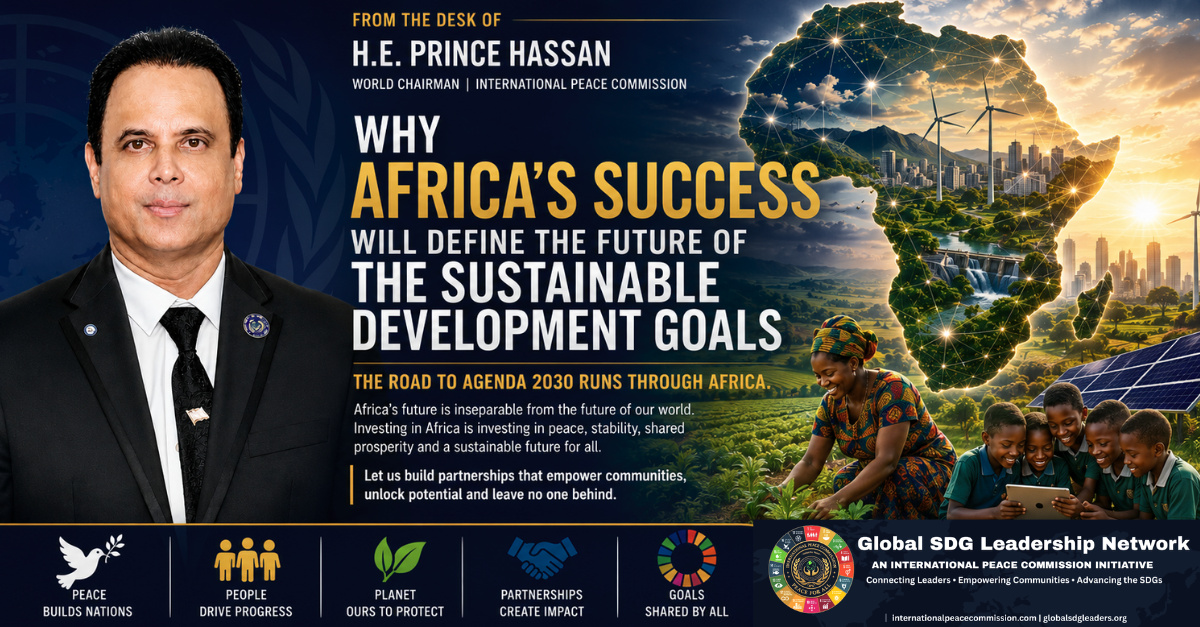
As the international community enters the final years of the 2030 Agenda for Sustainable Development, one reality is becoming increasingly clear: the future of the Sustainable Development Goals (SDGs) will be shaped more by Africa than by any other region.
This is not because Africa represents the world's greatest development challenge, but because it represents one of its greatest opportunities.
Home to the world's youngest population, extraordinary natural resources, expanding innovation ecosystems, and rapidly growing urban centers, Africa is poised to influence the future of global development for decades to come. The choices made today by African governments, communities, development partners, businesses and civil society will have profound implications not only for the continent but for the achievement of the SDGs worldwide.
The question is no longer whether Africa matters to sustainable development.
The question is whether the international community is prepared to invest in Africa's success as a shared global priority.
Beyond the Headlines
Too often, discussions about Africa are framed through the lens of conflict, humanitarian crises or economic vulnerability. While these challenges are real, they tell only part of the story.
Across the continent, countries continue making measurable progress in areas that directly support the Sustainable Development Goals. Maternal mortality has declined significantly since 2000, access to healthcare has expanded, life expectancy has increased, and many African countries continue implementing ambitious reforms aligned with both the SDGs and the African Union's Agenda 2063.
Sub-Saharan Africa also now records the highest proportion of women in managerial positions globally—44.6%, demonstrating that meaningful advances in gender equality and economic participation are possible even amid significant structural challenges.
These achievements deserve greater recognition because they demonstrate an important truth: when countries receive sustained investment, effective partnerships and strong local leadership, development progress follows.
The Challenge Is No Longer Vision—It Is Capacity
African governments have repeatedly demonstrated their commitment to implementing both the 2030 Agenda and Agenda 2063.
The obstacle today is not a lack of ambition.
It is the growing gap between ambition and available resources.
Many countries continue to face rising debt pressures, climate-related disasters, infrastructure deficits and reduced development financing at precisely the moment when accelerated investment is most needed. These challenges are compounded by global economic uncertainty, food price volatility and shrinking fiscal space.
Without stronger international cooperation and more predictable financing, even the most well-designed national development strategies will struggle to achieve their full potential.
Peace Is the Foundation of Sustainable Development
The Sustainable Development Goals are often discussed as separate objectives—ending poverty, improving education, protecting the environment or strengthening institutions.
In reality, they are deeply interconnected.
Peace is the condition that allows every one of these goals to flourish.
Communities cannot prosper where violence disrupts education. Healthcare systems cannot function effectively in prolonged instability. Investors hesitate where governance is weak, and climate resilience becomes far more difficult when conflict displaces communities and destroys livelihoods.
Peace is therefore not simply Sustainable Development Goal 16.
It is the foundation upon which every other goal depends.
For Africa, strengthening peace, good governance, inclusive institutions and community resilience is not only a humanitarian imperative—it is an economic necessity.
Africa's Development Is a Global Responsibility
Achieving the SDGs is not a responsibility that belongs to one continent alone.
Climate change, food security, migration, public health, digital transformation and economic stability are increasingly interconnected. Progress or setbacks in one region inevitably affect the rest of the world.
Supporting Africa's sustainable development should therefore never be viewed as charity.
It is a strategic investment in global stability, shared prosperity and collective security.
The recently released 2026 Africa Sustainable Development Report reinforces this message, highlighting the need for transformative, equitable and coordinated action while aligning implementation of the SDGs with the African Union's Agenda 2063.
Local Leadership Will Determine Global Success
International cooperation remains essential, but sustainable development cannot be delivered from conference rooms alone.
Real progress happens in villages, towns and cities where local leaders understand community needs, build partnerships and translate global commitments into practical action.
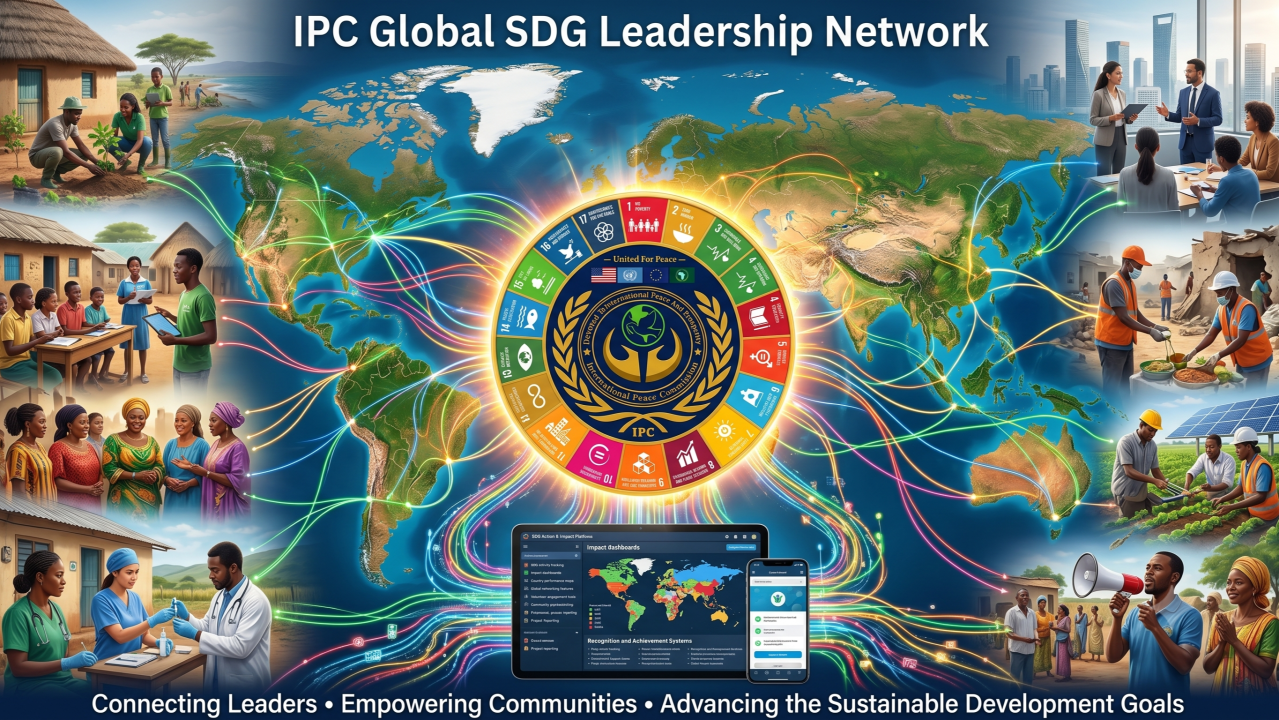
This principle lies at the heart of the International Peace Commission's Global SDG Leadership Network.
Across Africa, our growing network of SDG Ambassadors, Commissioners, Team Leaders and Representatives is working to strengthen community partnerships, promote peacebuilding, encourage youth leadership and support practical implementation of the Sustainable Development Goals at the local level.
The future of sustainable development will not be determined solely by international agreements.
It will be determined by empowered communities working together to create lasting change.
Looking Ahead
With fewer than five years remaining until 2030, the world cannot afford fragmented action or declining ambition.
Africa's success will help determine whether the Sustainable Development Goals become one of history's greatest examples of international cooperation—or one of its greatest missed opportunities.
The continent possesses the talent, innovation, natural wealth and human potential to shape a more peaceful, prosperous and sustainable future.
What is needed now is sustained partnership, responsible investment, effective governance and unwavering commitment to the principle that no region can be left behind if the world hopes to achieve the Sustainable Development Goals.
Because when Africa succeeds, the world moves closer to achieving the promise of Agenda 2030.
By H.E. Prince Hassan
World Chairman
International Peace Commission (IPC)