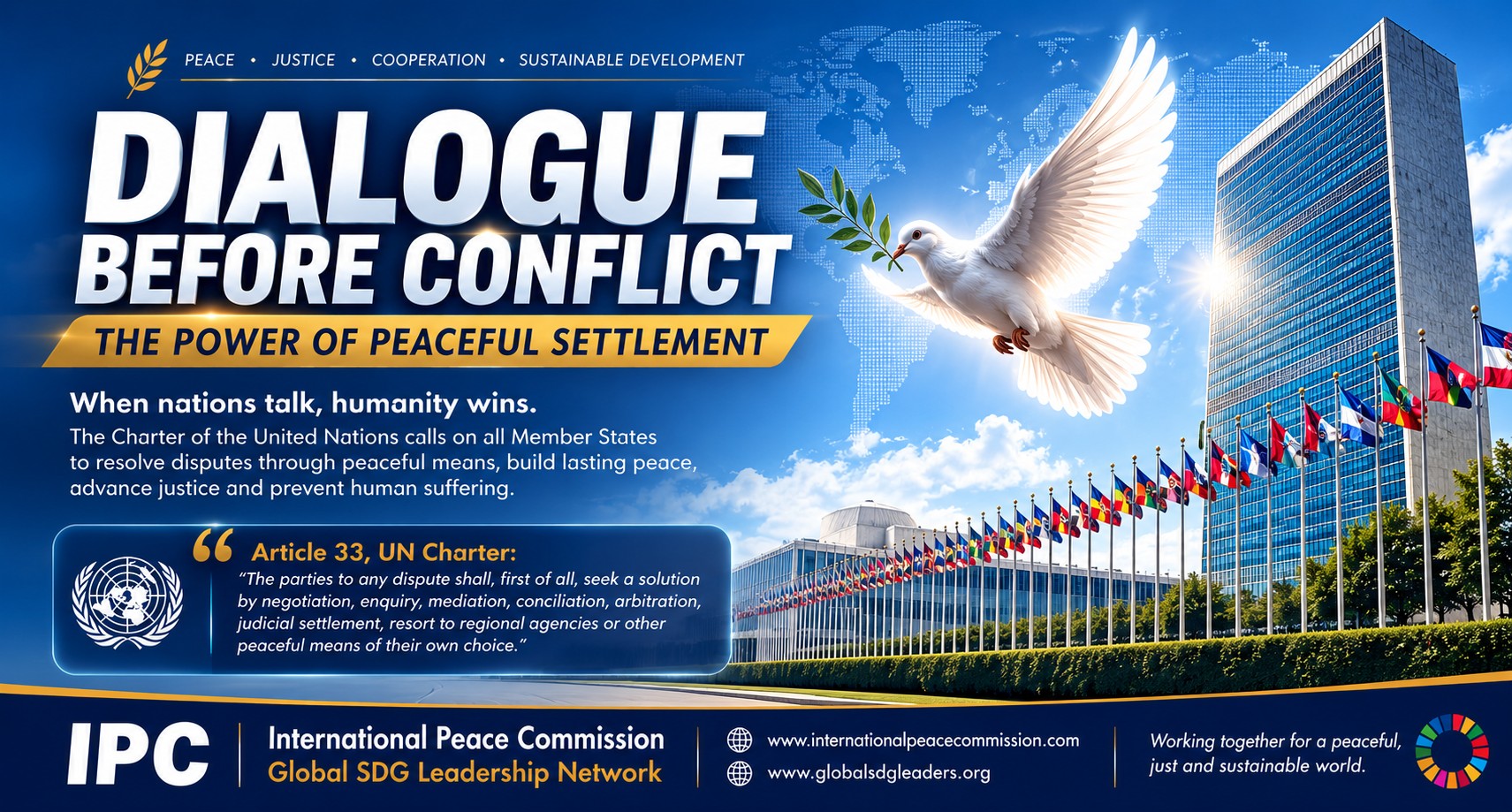
In an era of rising geopolitical tensions, humanitarian crises, and increasingly complex global challenges, the peaceful settlement of disputes has never been more important. At a time when conflicts continue to threaten lives, economies, and international stability, the principles enshrined in the Charter of the United Nations remain as relevant today as they were when the Organization was founded. Peace is not achieved by chance—it is sustained through dialogue, diplomacy, justice, and a collective commitment to resolve differences without violence.
The Charter of the United Nations affirms that disputes must be settled through peaceful means in a manner that preserves international peace and security while advancing justice and respect for international law. This is more than a legal obligation. It is a shared responsibility that protects human dignity, prevents suffering, and creates the conditions necessary for sustainable development.
Article 33 of the Charter provides the international community with a practical framework for peaceful dispute resolution. It encourages parties to pursue negotiation, enquiry, mediation, conciliation, arbitration, judicial settlement, regional arrangements, or other peaceful means of their own choosing. These mechanisms are not merely diplomatic procedures—they are proven instruments for preventing conflict, building trust, and strengthening international cooperation.
Negotiation enables parties to communicate directly and identify common ground. Enquiry establishes an impartial understanding of the facts. Mediation introduces a neutral facilitator to restore dialogue and promote consensus. Conciliation encourages structured compromise through balanced recommendations. Arbitration provides a mutually agreed binding decision, while judicial settlement ensures impartial resolution through international law. Regional organizations complement these mechanisms by addressing disputes within their respective regions and promoting collective stability. Together, these approaches form the practical architecture of peaceful conflict resolution.
The International Peace Commission (IPC) remains firmly committed to advancing this vision. We believe peace is not passive; it requires continuous leadership, cooperation, education, and meaningful engagement. Through advocacy, mediation, institutional partnerships, and community action, IPC promotes dialogue as the first and most effective response to conflict. Sustainable peace is built not through force, but through trust, justice, mutual respect, and shared responsibility.
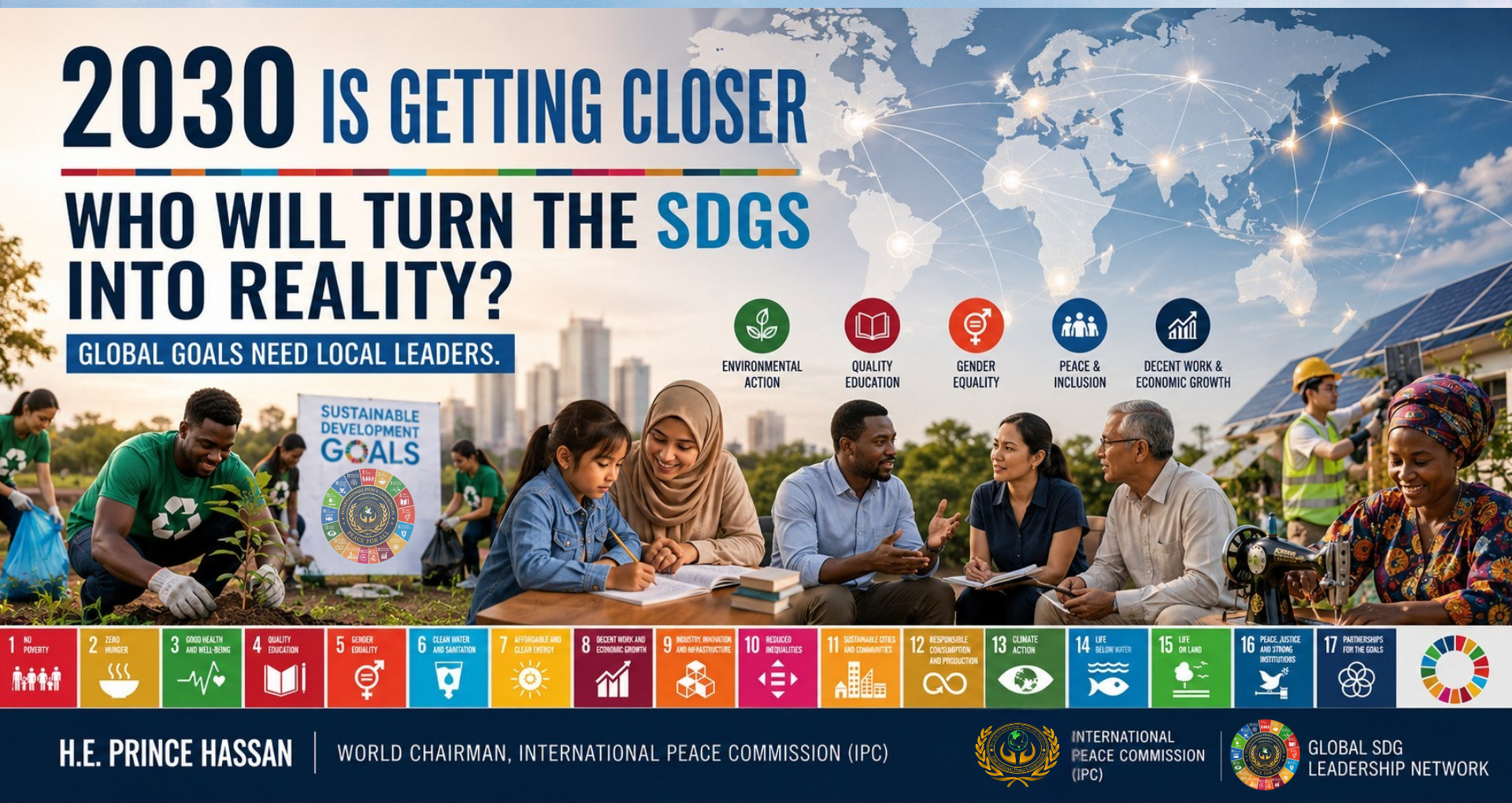
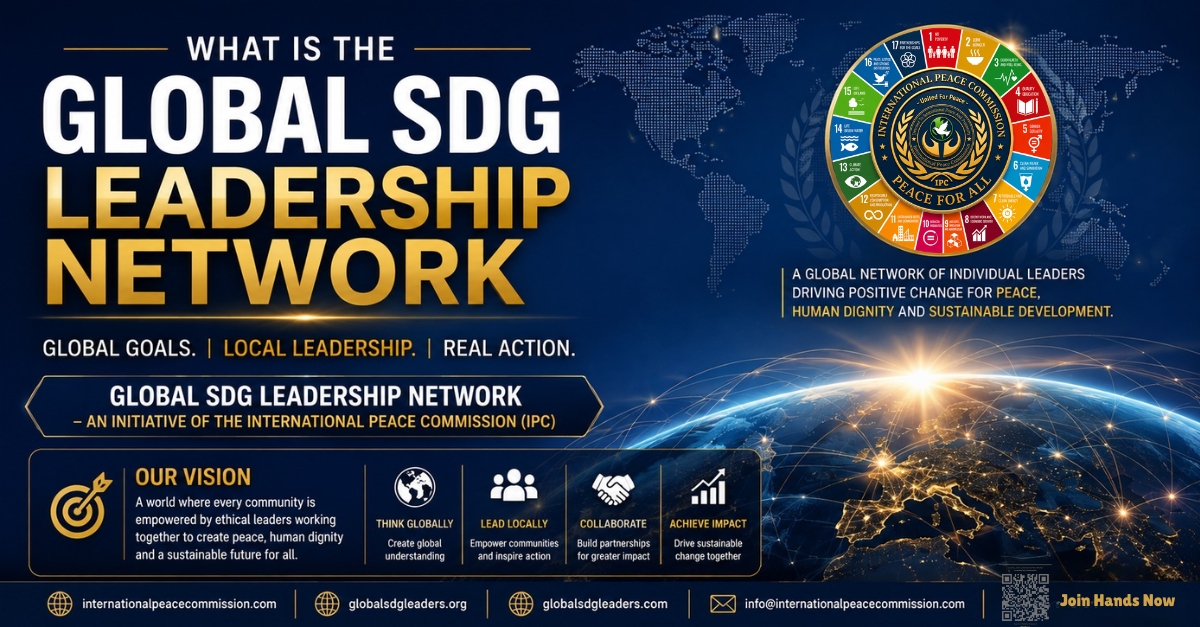
The IPC Global SDG Leadership Network strengthens this mission by bringing together leaders, institutions, organizations, and communities committed to advancing the United Nations Sustainable Development Goals. Peace and sustainable development are inseparable. Where conflict persists, development stalls, institutions weaken, investment declines, and communities become increasingly vulnerable. Where peace is protected, education expands, economies flourish, institutions become more resilient, and societies are empowered to build a more prosperous future.
This is why peaceful settlement must remain central to responsible leadership at every level. Governments, international organizations, civil society, academia, the private sector, faith communities, and local leaders all share a responsibility not only to respond to conflict, but to prevent it. The true measure of leadership is not the ability to prevail in confrontation, but the wisdom to prevent confrontation from occurring in the first place.
The United Nations has long recognized that peace cannot endure without justice, and justice cannot flourish without dialogue. Unresolved disputes deepen instability, displacement, inequality, and mistrust. Peaceful resolution, by contrast, creates the conditions necessary for reconciliation, economic growth, social cohesion, and respect for human dignity. It is therefore not simply a diplomatic principle—it is a cornerstone of human security and one of the strongest foundations for achieving the Sustainable Development Goals.
The International Peace Commission and the IPC Global SDG Leadership Network remain committed to advancing a global culture of peace by promoting dialogue, diplomacy, education, inclusive leadership, and international cooperation. Working alongside governments, international organizations, civil society, youth leaders, educational institutions, and local communities, we seek to strengthen peaceful, lawful, and constructive approaches to resolving differences before they escalate into humanitarian crises.
The responsibility to safeguard peace belongs to every nation, every institution, and every leader. By strengthening dialogue, respecting international law, promoting inclusive diplomacy, and investing in peaceful solutions, the international community can reduce the risk of conflict while creating the conditions necessary for sustainable development, human dignity, and shared prosperity.
Peace is not merely the absence of war; it is the presence of justice, cooperation, opportunity, and hope. Every dialogue that replaces confrontation, every act of diplomacy that prevents escalation, and every commitment to understanding over division brings humanity one step closer to a more peaceful and sustainable future.
As World Chairman of the International Peace Commission and Founder of the IPC Global SDG Leadership Network, I remain steadfast in the belief that lasting peace is achieved when nations choose dialogue over confrontation, cooperation over division, and shared humanity over hostility. The future of peace will not be determined solely by how conflicts are resolved, but by whether leaders have the vision and courage to prevent them before they begin.
H.E. Prince HassanWorld Chairman, International Peace Commission | Founder & Ambassador at Large, IPC Global SDG Leadership Network
About the International Peace Commission
The International Peace Commission (IPC) is a global peacebuilding organization dedicated to advancing peace, diplomacy, human dignity, sustainable development, and international cooperation. Through advocacy, leadership development, strategic partnerships, and community engagement, IPC works with governments, international organizations, civil society, academia, youth, and local communities to promote peaceful solutions to global challenges and strengthen a culture of dialogue and cooperation.
The IPC Global SDG Leadership Network is the Commission's worldwide leadership initiative, bringing together SDG Ambassadors, Commissioners, Team Leaders, Representatives, and Volunteers committed to advancing the United Nations Sustainable Development Goals through practical action, collaboration, and local leadership.
International Peace Commission 🌐 https://internationalpeacecommission.com
IPC Global SDG Leadership Network 🌐 https://globalsdgleaders.org