Introduction
Around the world, millions of people care about poverty, education, health, human rights, gender equality, climate change, peace, youth development and the future of their communities. Many already volunteer, advocate, organize projects or support people in need.
But there is an important difference between caring about change and leading change.
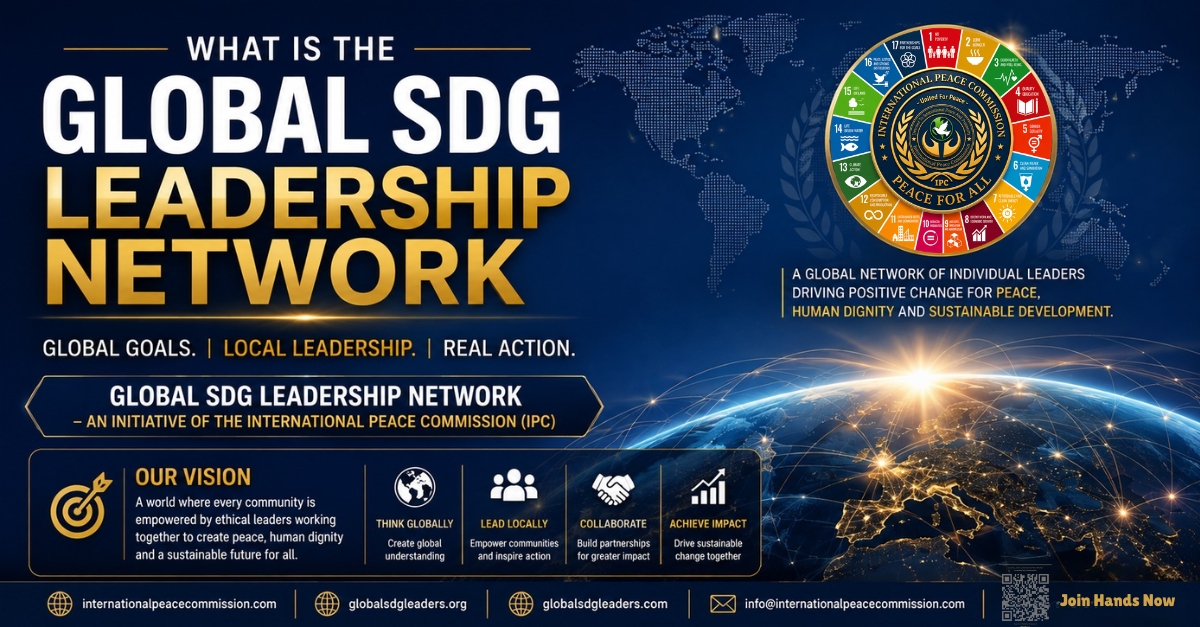
The Global SDG Leadership Network – An Initiative of the International Peace Commission (IPC) was created to bring together individuals who are ready to move beyond simply supporting good causes and take responsibility for creating measurable positive change in their communities.
It is not designed to be another ordinary organization where people simply become members, receive a title or certificate, and remain inactive.
It is a leadership and action network.
Its purpose is to identify, connect, develop and recognize people who are prepared to lead practical action connected to the United Nations Sustainable Development Goals (SDGs), peace, human dignity and sustainable development.
The idea behind the Network is simple:
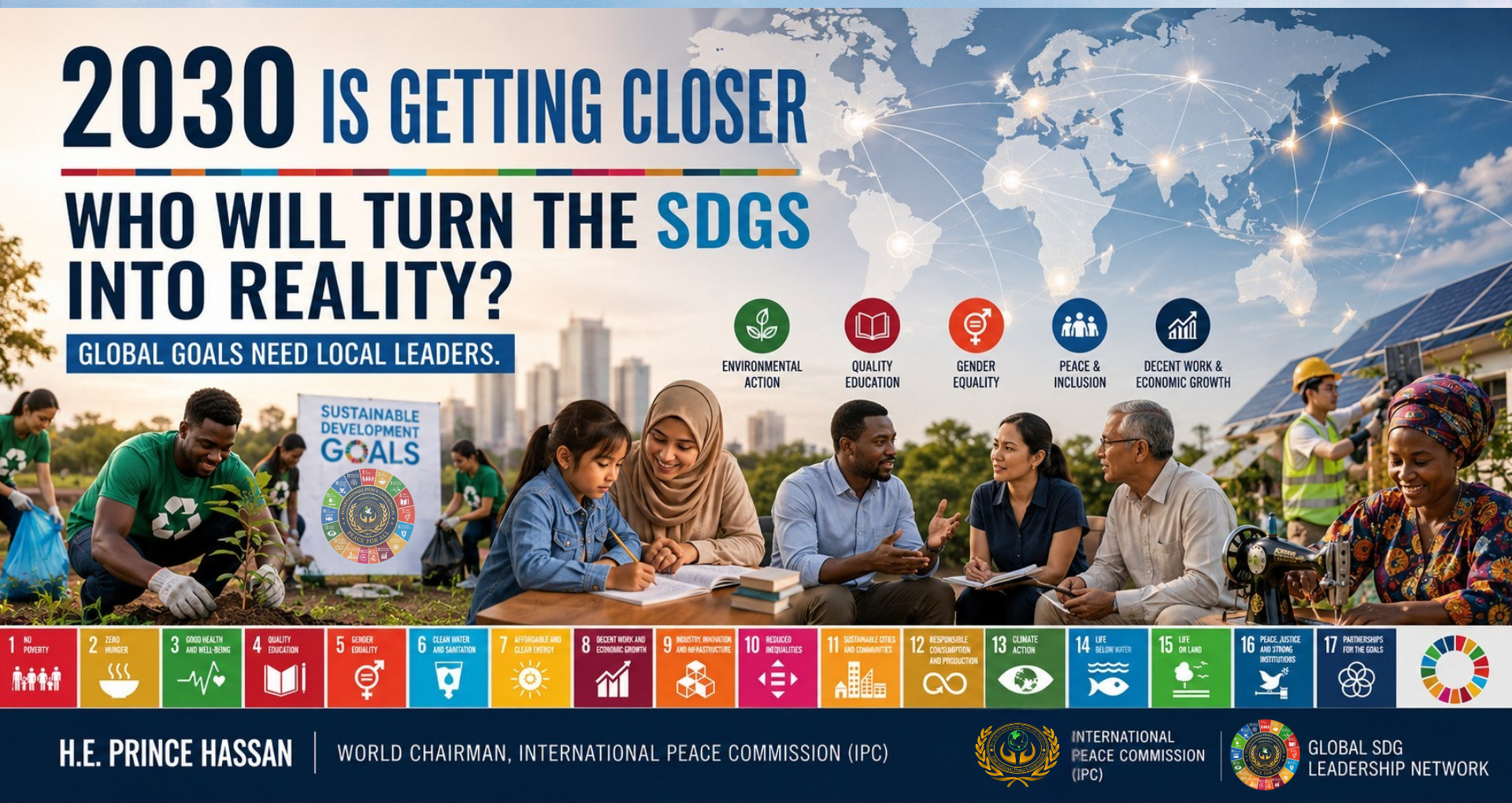
Global goals need local leaders.
The United Nations 2030 Agenda itself recognizes that achieving the SDGs requires participation not only from governments and international institutions, but also from civil society, businesses, local authorities, communities and individuals. It describes the Agenda as one involving “all people” and emphasizes partnership and collective action.
The Global SDG Leadership Network provides a structured way for individuals to become part of that larger movement for action.
Why Was the Global SDG Leadership Network Created?
The world does not have a shortage of organizations.
There are thousands of associations, nonprofits, networks, clubs, foundations and community groups doing important work. But sustainable development cannot be achieved by organizations alone.
We also need people who are willing to lead.
A community may have organizations, but someone still has to bring people together.
Someone has to identify a local problem.
Someone has to organize volunteers.
Someone has to speak about an issue that is being ignored.
Someone has to engage schools, businesses, community organizations and local institutions.
Someone has to turn an idea into an activity.
And someone has to accept responsibility for moving that work forward.
That person is a leader of change.
The Global SDG Leadership Network was therefore designed around individual leadership, supported by teams, partnerships and an international network.
This reflects the wider philosophy of the SDGs. The United Nations emphasizes that implementation happens at country and community level and that partnerships involving governments, civil society, academia, businesses and other stakeholders are essential to turning global commitments into results.
How Is GSLN Different From an Ordinary Organization?
This is one of the most important things to understand about the Global SDG Leadership Network.
In a traditional organization, a person may become a member simply because they support the organization's mission. Membership itself may be the primary relationship.
GSLN works differently.
A leadership appointment within the Network represents an expectation of participation, responsibility, team building and action.
A person should not join GSLN simply because they want another title after their name.
They should join because they are prepared to ask:
“What can I do in my community?”
A GSLN leader may organize an awareness activity, bring volunteers together, address a community problem, promote education, support environmental action, advocate for human dignity, engage young people, facilitate dialogue, build partnerships or develop another activity connected to their SDG portfolio.
The scale of an activity does not always determine its value.
A leader does not need to begin with a large conference, expensive project or major funding.
Leadership can begin with ten people in a community, a classroom, a virtual discussion, a neighborhood clean-up, a youth awareness session or a local partnership.
What matters is that something meaningful begins.
GSLN Is About Leadership, Not Titles
Being appointed an SDG Ambassador, SDG Commissioner, SDG Team Leader or SDG Representative should never be understood simply as receiving an honorary title.
Each position represents a level of responsibility within the Network.
Leadership means building relationships with people, creating a team, participating in Network activities, communicating with Headquarters, sharing knowledge, identifying opportunities and demonstrating positive action.
A title may identify the role.
Action gives the title its meaning.
This is why participation and activities are important within GSLN. Recognition is connected to what leaders actually contribute, not simply to how impressive their title sounds.
You Do Not Have to Be Famous, Wealthy or Powerful
Another important purpose of GSLN is to open leadership opportunities to people who may already have the ability to make a difference but have never been given an international platform.
A leader of change can be a teacher, student, entrepreneur, community volunteer, professional, researcher, advocate, humanitarian worker, artist, journalist, environmentalist, healthcare professional, retired professional or community organizer.
You do not need political office.
You do not need to be wealthy.
You do not need thousands of followers.
And you do not need to already lead a large organization.
What matters is your commitment, integrity, willingness to work with others and readiness to act.
The 2030 Agenda was deliberately created as a universal agenda. It recognizes that sustainable development requires governments as well as civil society, businesses, academia, local authorities and people themselves.
GSLN takes that principle seriously by creating space for capable individuals to become organized leaders of local action.
From Individual Leadership to Team Leadership
Although GSLN recognizes individuals, it is not designed to promote individualism.
A real leader builds others.
For this reason, leaders within the Network are expected to develop teams and engage SDG Representatives, Team Leaders, Volunteers and community participants according to their level of responsibility.
The goal is not to create one person doing everything.
It is to create a multiplying effect:
One committed individual becomes a leader.
One leader develops a team.
One team engages a community.
Communities connect across countries.
Local actions become part of a global movement.
That is the model behind the Global SDG Leadership Network.
Think Globally. Lead Locally.
The Sustainable Development Goals are global, but many of the problems they address are experienced locally.
Climate change may be global, but flooding affects a particular community.
Poverty is global, but hunger exists in a particular household.
Gender inequality is global, but discrimination happens to an individual.
Peace is a global aspiration, but conflict can begin between neighbors and communities.
Education is a global priority, but a child without access to learning experiences that problem personally.
This is why GSLN encourages leaders to understand their own communities first.
What problem exists around you?
Which SDG relates to it?
Who can you bring together?
What realistic action can you take?
How can that action grow?
This approach is consistent with the current emphasis of the UN Sustainable Development Group: the SDGs provide a shared global framework, but delivery ultimately happens locally and must respond to real-world needs.
A Network That Connects Leaders Across Borders
A community leader should not have to work in isolation.
Through GSLN, leaders from different countries, professions and backgrounds can connect around common challenges.
An SDG leader working on youth development in Africa may learn from someone addressing a similar challenge in Asia.
A climate leader may collaborate with educators.
A peace advocate may work with young people.
A human-rights leader may connect with professionals working on gender equality or access to justice.
This cross-border and cross-sector collaboration is especially important because the SDGs themselves are interconnected.
Peace affects development. Education affects poverty. Gender equality affects economic opportunity. Climate change affects health, food security and migration.
No single person, organization or sector can solve these challenges alone.
That is why SDG 17 specifically emphasizes partnerships and cooperation.
Leadership Must Be Visible Through Action
GSLN believes that recognition should follow contribution.
Leaders are therefore encouraged to document their activities, share reports, photographs and recordings, participate in Network collaboration, communicate their achievements and demonstrate the impact of their work.
This is not simply about publicity.
Documentation creates accountability.
It allows the Network to understand what leaders are doing, recognize successful initiatives, share good practices, identify active leaders and give credible visibility to work happening in communities.
A leader who consistently takes meaningful action should have opportunities to be recognized for that work.
GSLN is intended to make local leadership visible globally.
Recognition With Responsibility
Recognition is an important part of the Global SDG Leadership Network.
Many people around the world perform meaningful community work without ever receiving international visibility or acknowledgment.
GSLN seeks to change that by creating opportunities for active leaders and volunteers to have their work documented, shared and recognized through the resources and platforms available within the International Peace Commission and the Network.
But recognition comes with responsibility.
The purpose is not:
“Give me a title so people will recognize me.”
The GSLN approach is:
“Give me an opportunity to serve, and let my work demonstrate my leadership.”
That distinction defines the culture we are building.
GSLN Is Not the United Nations
It is equally important to be clear about what the Network is not.
The Global SDG Leadership Network is not a United Nations agency or UN-appointed body.
The Sustainable Development Goals belong to the global 2030 Agenda adopted by all UN Member States, and organizations and individuals around the world are encouraged to contribute toward their achievement.
GSLN is an initiative of the International Peace Commission (IPC) that organizes and supports individuals who want to advance peace and sustainable development through leadership and practical action.
Its leaders represent the Global SDG Leadership Network within their authorized roles; their appointments should not be presented as appointments by the United Nations.
This clarity protects the credibility of every leader and of the Network itself.
Who Is GSLN For?
The Global SDG Leadership Network is for the person who looks at a problem and asks:
“What can I do about it?”
It is for people who are willing to volunteer their leadership, build teams, learn, collaborate, organize activities, engage communities and accept accountability.
It is for individuals who understand that international recognition should be built upon real service and measurable participation.
And it is particularly for emerging leaders who may have the passion and ability to make a difference but need a structured international network through which they can connect, grow and demonstrate their leadership.
From Recognition to Impact
The ultimate goal of GSLN is bigger than appointments, certificates, events or social-media posts.
It is to develop a worldwide community of credible, active and connected SDG leaders.
Imagine thousands of leaders working in different communities but connected by the same basic commitment:
to advance peace;
to protect human dignity;
to support sustainable development;
to build partnerships;
to empower others;
and to turn global goals into local action.
That is the vision.
The United Nations has repeatedly emphasized that achieving the 2030 Agenda requires cooperation across governments, civil society, businesses, academia and other stakeholders.
The Global SDG Leadership Network provides individuals with an opportunity to become part of that wider effort—not as spectators, but as leaders of change.
The Message Is Simple
GSLN is not about collecting titles.
It is about accepting responsibility.
It is not about waiting for someone else to solve a problem.
It is about asking what you can do.
It is not about working alone.
It is about building teams and partnerships.
It is not about recognition without action.
It is about action that deserves recognition.
The Global SDG Leadership Network exists for individuals who are ready to step forward, lead responsibly, serve their communities, connect globally and be recognized for the positive change they create.
Global SDG Leadership Network
https://globalsdgleaders.org/
An Initiative of the International Peace Commission (IPC)
Think Globally. Lead Locally. Create Change.